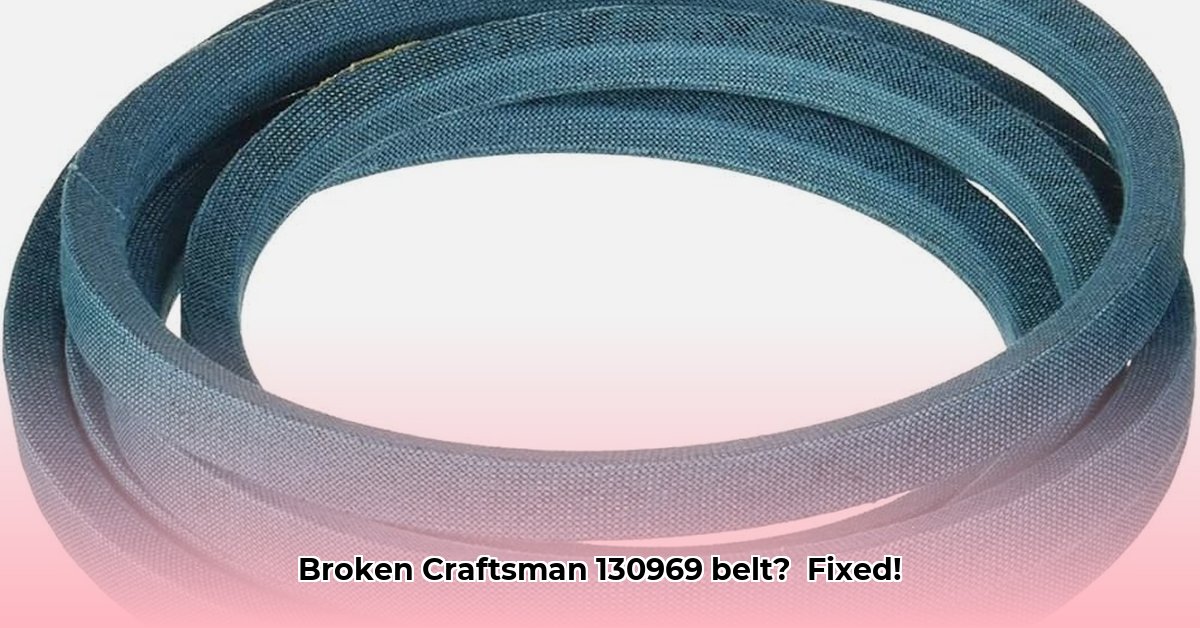
Replacing Your Craftsman 130969 Tractor Drive Belt: A Step-by-Step Guide
Is your Craftsman 130969 tractor's drive belt worn out? Don't worry, replacing it is a manageable task, even for DIY enthusiasts. This guide walks you through the process, ensuring you get your tractor back up and running smoothly. We'll cover everything from gathering supplies to addressing potential problems. For more Craftsman tractor resources, check out this helpful website.
Assessing Your Belt Condition: Is Replacement Necessary?
Before you start, thoroughly inspect your Craftsman 130969 belt. Look for cracks, fraying, or any signs of significant wear. Even minor damage can affect performance and ultimately lead to more costly repairs later. Replacing a worn belt is preventative maintenance that saves you time and money in the long run. Is your belt showing any obvious signs of wear?
Essential Supplies: What You'll Need
You'll need a few basic tools and materials. Most importantly, ensure you have the correct replacement belt for your Craftsman 130969 tractor. Don't forget to consult your owner's manual for the exact specifications. Here's a basic checklist:
- New Craftsman 130969 drive belt (verify the correct part number!)
- Appropriate wrenches (sizes specified in your owner's manual)
- Work gloves
- Flashlight (optional, for better visibility)
- Owner's Manual (crucial for model-specific instructions)
Step-by-Step Belt Replacement: A Detailed Procedure
Remember, safety comes first! Always disconnect the spark plug wire before beginning any work on your tractor. This crucial step prevents accidental starting and potential injury.
Disconnect the Spark Plug Wire: This is your primary safety precaution. Ensure the tractor cannot start accidentally.
Locate the Belt: Refer to your owner's manual for the exact location of the drive belt and its routing path. This step is crucial for proper reinstallation.
Release Belt Tension: Your owner's manual details how to adjust the belt tension on your specific Craftsman 130969 model. This usually involves loosening a bolt or lever.
Remove the Old Belt: Carefully remove the worn belt from the pulleys. Pay close attention to the belt's routing – you'll need to replicate it with the new belt.
Install the New Belt: Guide the new belt onto the pulleys, mirroring the path of the old one. Ensure it sits correctly on each pulley.
Re-tighten and Test: Re-tighten the tension mechanism according to the specifications in your owner's manual. Reconnect the spark plug wire, start your tractor, and listen for any unusual noises. Does the belt run smoothly?
Troubleshooting: Addressing Common Problems
Even with careful attention, issues may arise. Here are some common problems and their solutions:
Belt Slipping: Check the belt tension. If it's correctly adjusted, inspect the pulleys for wear or damage. Worn pulleys can cause belt slippage.
Repeated Belt Breakage: This often indicates a more serious problem, such as incorrect tension, damaged pulleys, or a faulty replacement belt. A thorough inspection of the entire drive system may be necessary.
The Value of Prompt Belt Replacement: Pros and Cons
Replacing your drive belt promptly offers several advantages:
- Improved tractor performance
- Prevention of more extensive, costly repairs
- Extended tractor lifespan
- Enhanced safety (avoiding dangerous belt failures)
However, there are also considerations:
- The cost of a new belt
- The time required for the job
- Potential difficulty if you are not mechanically inclined
Remember, while this guide provides a general overview, always refer to your owner's manual for model-specific instructions. If you’re unsure about any step, it’s best to consult a qualified mechanic. This investment in preventative maintenance ensures your tractor runs efficiently and safely for years to come. Is it worth the time and effort to avoid potentially more significant problems? Absolutely.